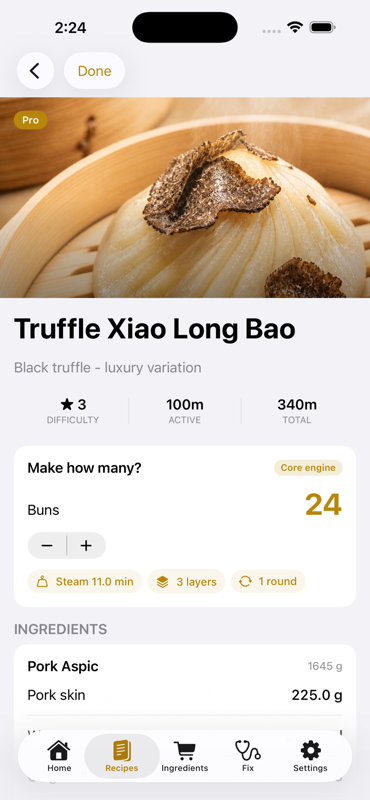
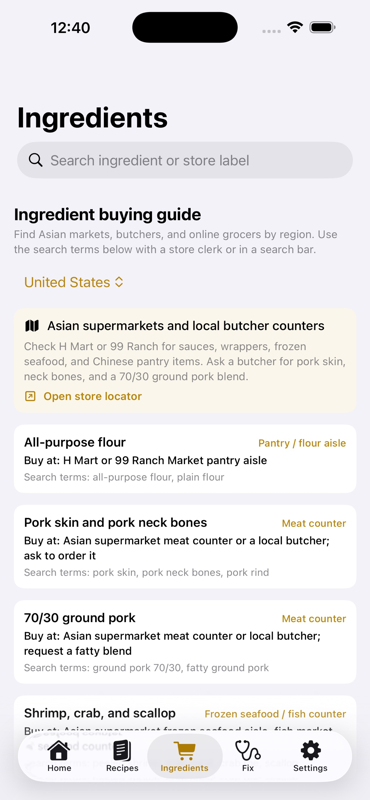
Scaling soup dumplings is more than multiplying the flour by the number of guests. You also need to account for dumpling size, servings per person, steamer capacity, and the time the filling spends outside the refrigerator. Plan the batch before you start mixing.
1. Decide the basket before the ingredients
Set the number of diners and dumplings per person first. Then choose how many baskets you can steam without crowding. A clear target prevents a large dough batch from becoming a rushed folding session.
2. Keep the component ratios together
Scale wrapper dough, filling, and soup gel as one system. If you increase the meat but not the gel, or add dough without enough filling, the balance changes even when every individual measurement looks reasonable.
3. Split the work into cold, manageable portions
Keep unused filling chilled while you fold. Divide the dough and filling into smaller working portions so the later dumplings are as workable as the first. This also gives you natural checkpoints if the dough needs a short rest.
4. Record what changed after steaming
Note whether the wrappers were dry, the soup was generous, or the baskets needed more space. A short post-batch note helps you adjust the next group without changing every variable at once.