The secret to better Taiwanese bubble tea is not a complicated ingredient list. It is control: a strong tea base that can stand up to ice and milk, pearls cooked until springy, and syrup added while the texture is still right. Use the method below as a reliable starting point, then adjust sweetness and tea intensity to your taste.
A repeatable starting point for one cup
Use quick-cook tapioca pearls, jasmine tea, brown sugar syrup, milk, and ice as your baseline. Pearl brands vary, so follow the package directions when they differ and record the result of your own batch before changing the timing.
Continue with the brown sugar boba balance guide →1. Build a tea base with enough structure
Choose a bold black tea, roasted oolong, or a blend with enough aroma to stay present after dilution. Brew slightly stronger than you would for a plain cup because ice, milk, and syrup will soften the flavor. Let the tea cool before assembling so the drink stays balanced instead of watery.
2. Cook tapioca pearls for texture, not just color
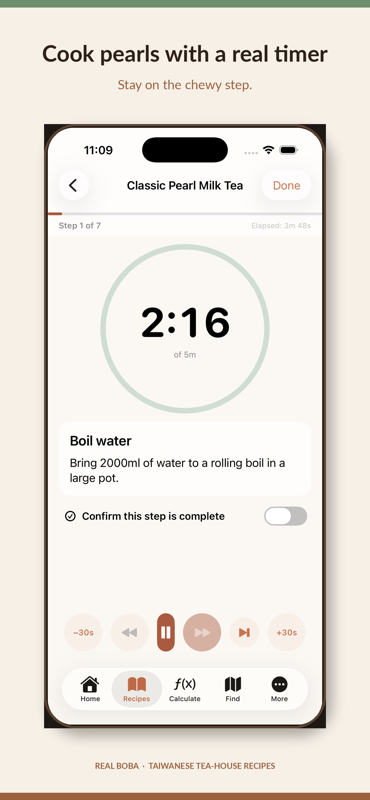
Bring plenty of water to a full boil before adding pearls. Stir early so they do not settle, then cook according to the package or recipe timing. Resting is just as important as boiling: the center finishes setting during the covered rest. Rinse briefly, then coat with warm brown sugar syrup to keep the surface glossy and separate.
3. Balance syrup, tea, and ice
Add syrup while the pearls are warm, but do not let sweetness overpower the tea. Fill the glass with pearls first, add milk or water, pour in the tea, and finish with ice. Taste before adding more syrup; a tea-forward first sip usually becomes sweeter as the pearls release their coating.
4. Scale the recipe for your glass
A larger batch needs more than simply multiplying every ingredient if your cooking vessel and cooling time change. Keep the tea-to-water ratio consistent, then use a calculator to scale pearls, syrup, and liquid for the number of servings you need. This is especially useful when making drinks for friends.
5. Start with a repeatable pearl baseline
RealBoba’s current Classic Pearl Milk Tea workflow uses a one-serving baseline with 25 minutes of covered cooking followed by 15 minutes of covered resting. Treat that as a starting point, not a universal promise: pearl brands and package instructions vary. Record the actual result from your own batch, then change one variable at a time.