Taiwan has a vibrant coffee culture, from independent roasters to careful home brewers. The most useful brewing habit is not chasing a single perfect recipe; it is learning which variable changed the cup. Start with a stable ratio, track time, and make one adjustment at a time.
1. Choose a ratio you can repeat
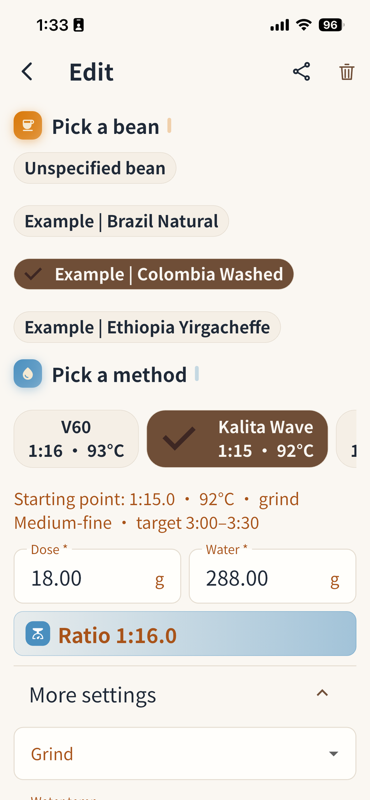
A common starting point for pour-over is around 1 gram of coffee to 15–17 grams of water. The exact number matters less than consistency. Weigh both coffee and water, then keep the dose fixed while you learn how the brew responds to grind size and pour speed.
2. Track the bloom and the total time
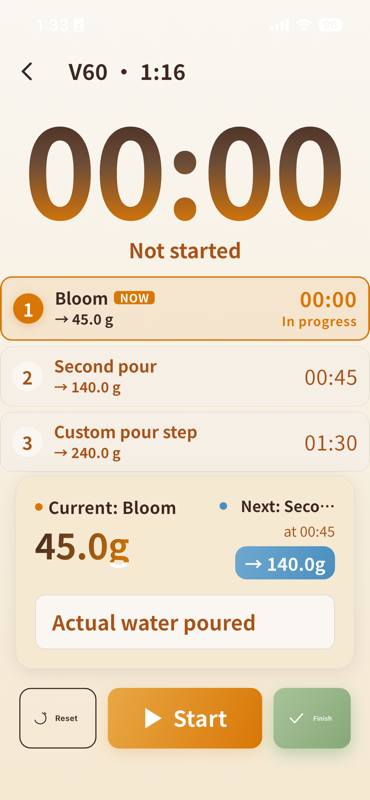
Fresh coffee releases gas during the bloom, so give the grounds enough water to wet evenly before the main pours. A timer helps you notice whether a slow drawdown, rushed pour, or uneven bed is driving the result. Time is a clue—not a score by itself.
3. Change one variable at a time
If the coffee tastes sharp, hollow, bitter, or muted, resist changing grind, water, and temperature simultaneously. Keep notes on the bean, recipe, equipment, and sensory result. The next cup becomes an experiment with a clear question rather than a reset button.
4. Build a personal brew history
Beans change as they rest, and your equipment changes with them. Save the recipe that worked, note what you would alter, and revisit it next week. A searchable brew history turns scattered morning notes into a personal coffee playbook.