Brown sugar boba works because four parts support one another: tea gives the drink structure, syrup adds caramel depth, milk rounds the edges, and ice controls the finish. Use the framework below as a reference baseline rather than a tested guarantee. Pearl brands, tea strength, milk choice, and ice amount can all change the result.
1. Let the tea carry the drink
Brew a tea base that is stronger than a plain cup because milk, syrup, and ice will soften it. Black tea and roasted oolong both work well; choose the one whose aroma you want to notice after the drink is chilled. If the first sip tastes mostly sweet, strengthen the tea before adding more syrup.
2. Use brown sugar syrup as a layer, not a cover
Warm syrup helps coat the pearls and creates the signature caramel note, but it should not erase the tea. Start with a light coating, taste the drink after the milk and ice are added, and increase sweetness in small steps. A glossy pearl layer can look dramatic without requiring an overly sweet cup.
3. Add milk for body and a clean finish
Milk softens tannin and makes the drink feel fuller. Add it after the tea base is ready, then adjust in small pours. Too much milk can make brown sugar boba taste muted; too little can leave the syrup sharp. Oat, dairy, and other milks each change the final body, so keep the rest of the variables steady when comparing them.
4. Treat ice as part of the recipe
Ice is not just a serving detail—it dilutes the tea and syrup as it melts. If the drink tastes right before chilling but weak afterward, the tea base needs more structure or the ice needs to be reduced. Assemble the drink cold, taste it again after a short rest, and use that comparison to guide the next adjustment.
5. Fix one variable at a time
Use a simple diagnosis: flat means check tea strength, overly sweet means reduce syrup, heavy means reduce milk or ice melt, and sharp means review the tea and syrup balance together. Write down the one change you make so the next cup gives you a useful comparison instead of a completely new guess.
6. Keep the ratio visible while you build the cup
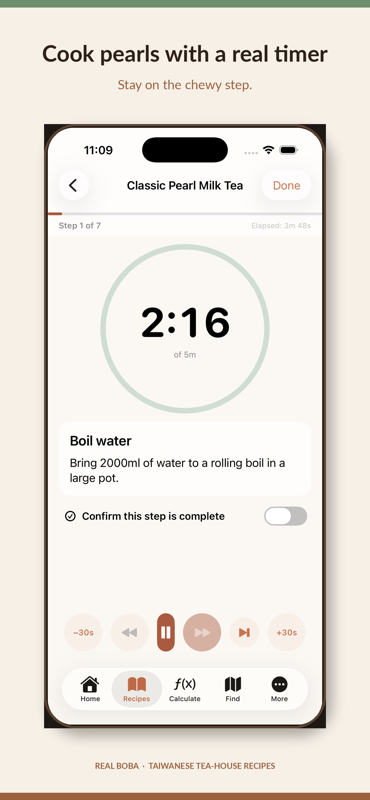
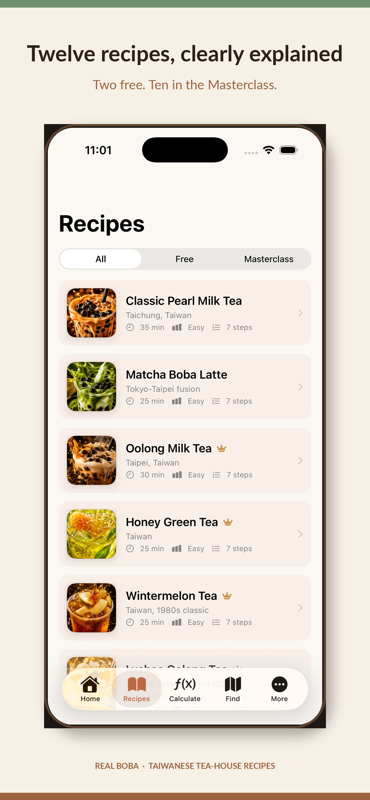
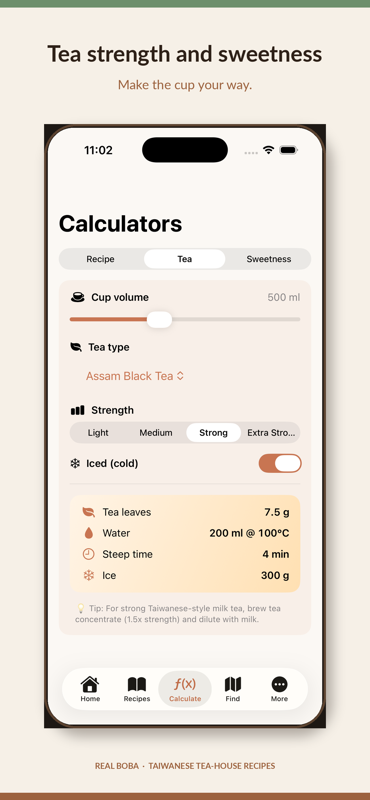
When making one drink or a small batch, scaling is easier when the tea, pearls, syrup, milk, and ice stay visible as separate components. RealBoba keeps recipe steps, timing, and calculations close together so you can adapt the drink without losing the balance you were trying to protect.