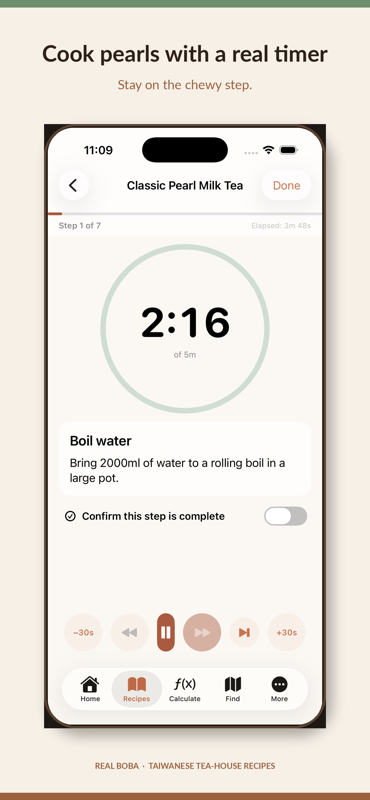
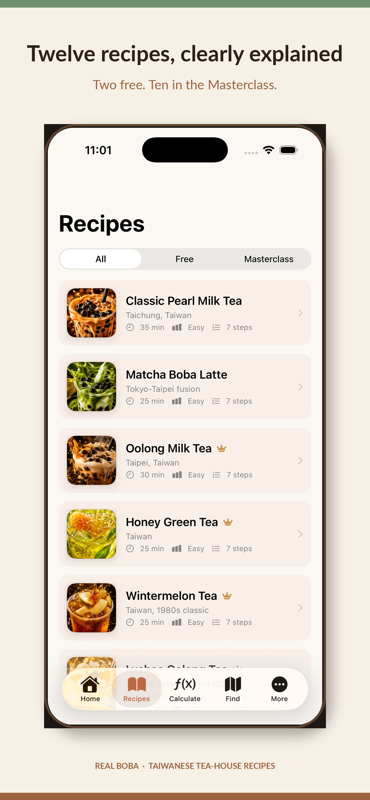
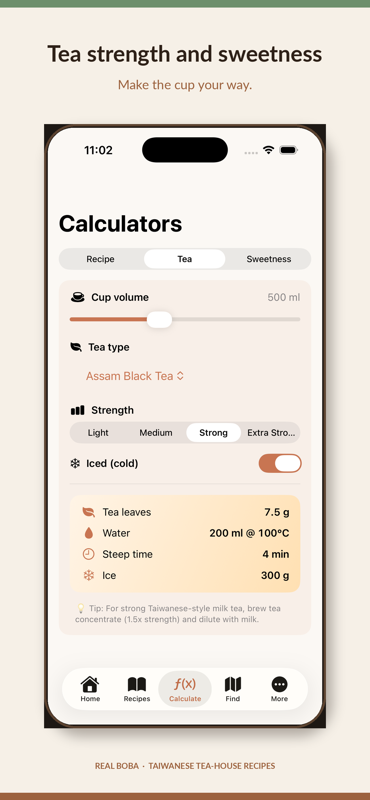
Matcha boba is easiest to understand when the green tea, milk, sweetness, pearls, and ice each have a job. Use the framework below to keep the tea aromatic and the sweetness adjustable. It is a reference guide, not a claim that the quantities were physically tested.
1. Start with a smooth matcha base
Sift the matcha if needed and mix it with a small amount of liquid first so the powder hydrates evenly. A smooth concentrated base is easier to balance than a large volume with dry pockets. Keep the tea flavor visible before adding milk or syrup.
2. Let milk soften, not erase, the tea
Milk gives matcha boba body and a rounded finish, but too much can mute the aroma. Add it in measured steps and keep the tea base steady when comparing dairy and plant-based options. The best amount is the one that leaves a clear green-tea finish.
3. Keep sweetness in a separate layer
Brown sugar, simple syrup, or another sweetener can add depth, but it should not turn matcha into a generic sweet milk drink. Coat the warm pearls lightly, taste the assembled cup, and increase sweetness in small steps if needed.
4. Add pearls and ice with intention
Pearls bring chew and warmth while ice brings temperature and dilution. Assemble the cup so you can see where the sweetness and tea are entering the drink, then judge the final result after it reaches serving temperature.
5. Diagnose by changing one variable
If matcha tastes weak, review the tea base. If the drink feels heavy, review milk or ice melt. If the syrup dominates, reduce the coating before changing the whole recipe. Write down the one change so the next cup answers a clear question.