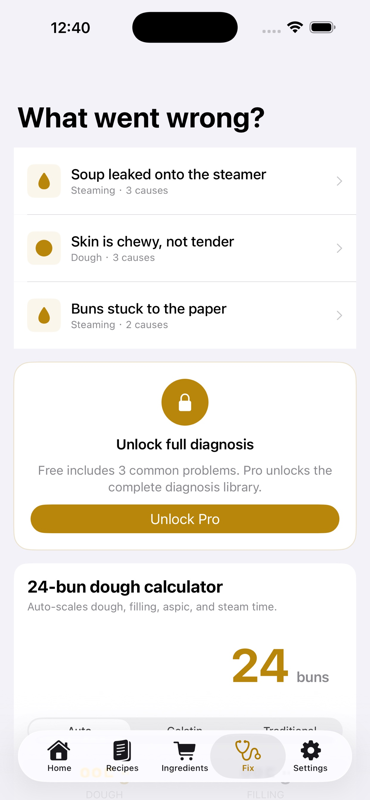
A leaking soup dumpling is rarely a mystery with only one cause. The wrapper may be too thin in the center, the filling may be warm, or the final seal may be stretched past its limit. Work through the checkpoints in order so the next batch gives you a useful answer.
1. Protect the wrapper before filling
Rest the dough long enough for it to relax, then roll the edge thinner than the center. A strong center supports the filling while the flexible rim gives you enough material to make a clean seal. Dust lightly; excess flour can stop the pleats from gripping.
2. Keep the filling cold and portioned
Cold filling is easier to scoop and less likely to soften the wrapper while you work. Portion each dumpling before folding so you do not overfill the first few and run short of wrapper at the top.
3. Close the opening without stretching it thin
Make small, even pleats close to the filling and keep the opening narrow as you rotate. Finish with a firm pinch or twist, but do not pull the dough upward until it becomes paper-thin. The seal should be secure before the dumpling enters the steamer.
4. Give the basket room and a steady boil
Leave space between dumplings so expanding wrappers do not touch. Steam over a steady boil and let the basket rest briefly before moving it. Sudden handling is most damaging when the wrapper is hot and delicate.